

Missing teeth affect far more people than many realize. Whether the loss came from decay, gum disease, or an injury, gaps in the smile can undermine chewing ability, speech clarity, and self-assurance. Modern implant dentistry offers a predictable way to replace one tooth, several teeth, or an entire arch with results that behave much like natural teeth.
Dental implants are small, biocompatible posts surgically placed into the jawbone to support crowns, bridges, or dentures. They act as artificial tooth roots, providing the foundation for restorations that look, feel, and function in a way that closely resembles natural dentition. With careful planning and proven techniques, implants can restore everyday activities (eating, speaking, and smiling) with renewed ease.
At Signature Dental Care, we combine technology and clinical experience to design implant solutions centered on long-term comfort and function. Our approach focuses on preserving oral health and facial structure while delivering an outcome that integrates seamlessly with your smile.

Unlike removable options, implants are anchored directly to the jaw, which gives them stability that removable prostheses cannot match. Once integrated with the bone, an implant-supported crown or bridge performs like a natural tooth, restoring bite strength and permitting comfortable chewing across a wide variety of foods.
Implant restorations are designed to blend with surrounding teeth in shape, color, and proportion, so the finished result appears natural. Because an implant replaces the root as well as the visible tooth, it also helps maintain the structure of the jaw over time, supporting facial contours and reducing the bone loss that often follows tooth extraction.
For patients currently wearing traditional dentures, implant support can be life-changing. Implants eliminate much of the movement associated with dentures and remove the need for messy adhesives, improving function and confidence when eating, speaking, and socializing.
Dental implants are typically made of titanium or other biocompatible materials that the body tolerates well. After placement, a process called osseointegration occurs: living bone gradually fuses to the implant surface, creating a secure, long-lived foundation for the final restoration. This biological bonding is the key to the stability and durability of implant-supported teeth.
The implant itself replaces the tooth root, while a custom-crafted crown, bridge, or denture rebuilds the visible portion of the tooth. Advanced imaging and digital planning help determine optimal implant position, angulation, and size, which improves outcomes and reduces surprises during surgery.
Because implants become part of the jaw, they transmit chewing forces into the bone in a way that maintains normal bone physiology. This contrasts with removable prostheses, which sit on top of the gums and do not provide the same level of stimulation to underlying tissues.
Implants provide several long-term benefits that affect both oral health and daily life. Because they replace the root, implants prevent the bone loss that typically follows tooth removal and help maintain natural facial support. This structural preservation reduces the risk of the sunken appearance that can occur after repeated tooth loss.
Functionally, implant-supported teeth restore a greater range of diet and allow speech without worry about shifting prostheses. Implants are resistant to decay and, with proper care, can remain stable for many years, making them a durable option for many patients.
From a restorative perspective, implants often allow clinicians to avoid altering neighboring healthy teeth, which is sometimes necessary for traditional bridgework. This conservative approach protects the integrity of remaining dentition while resolving the gap left by a missing tooth.

Successful implant treatment starts with a comprehensive evaluation that considers your general health, oral condition, bone volume, and personal goals. We use a combination of clinical exams and imaging, often including 3D scans, to assess bone density, anatomical landmarks, and the best locations for implant placement.
Treatment planning is tailored to the patient’s needs: some cases allow for immediate provisional teeth, while others require staged care to maximize long-term stability. Our team outlines the expected steps, timeline, and care considerations so you know what to expect from start to finish.
We also discuss options for anesthesia and sedation to ensure a comfortable experience during surgical steps. Clear pre-operative and post-operative instructions help promote smooth recovery and predictable healing.
Placing an implant is generally an outpatient procedure performed under local anesthesia, often with options for oral or IV sedation when appropriate. The surgery itself can be straightforward or more involved, depending on how many implants are placed and whether preparatory procedures are needed.
After the implant is positioned in the jawbone, it will require time to integrate, commonly several months, before the final restoration is attached. In certain cases, temporary teeth can be placed immediately to maintain appearance and function during healing, but the approach depends on the clinical circumstances and stability achieved at surgery.
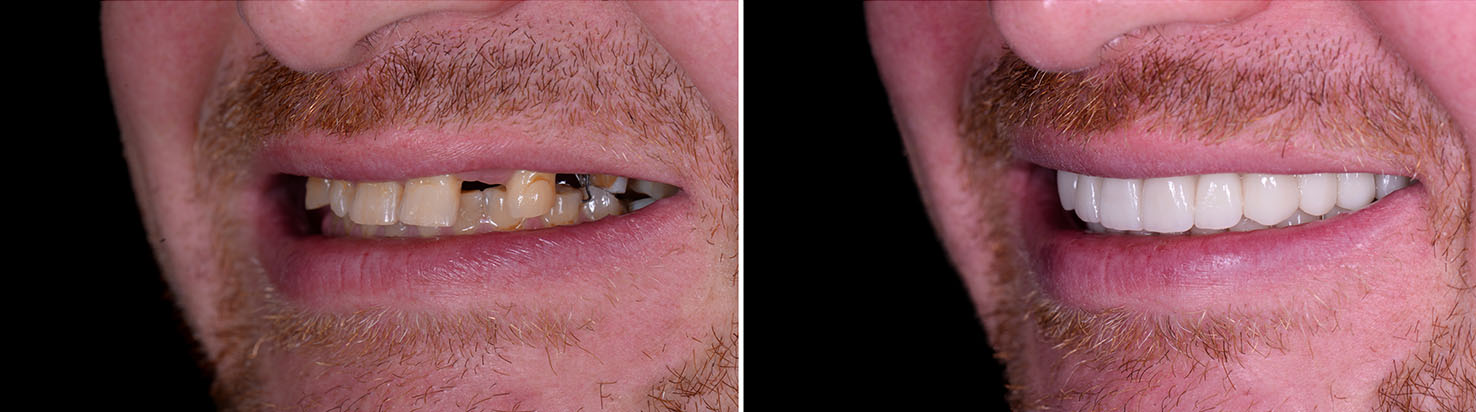
Implant success depends on adequate bone to support the fixture. If bone has been lost due to periodontal disease, long-standing tooth loss, or trauma, grafting procedures can rebuild the necessary volume to stabilize an implant. Bone grafts may be placed at the time of extraction, before implant placement, or simultaneously with implant surgery, depending on the clinical plan.
Grafting options range from small particulate grafts to block grafts or sinus lifts for the upper jaw. These procedures are common, well-documented, and designed to create a healthy foundation for predictable implant integration.
Every implant treatment should begin with a clear plan and a focus on long-term oral health. We design restorations to meet functional needs and aesthetic goals while taking steps to protect the health of adjacent teeth and supporting tissues. Maintenance (regular hygiene, professional checkups, and attentive daily care) plays a central role in keeping implant-supported restorations healthy for years to come.
Our team guides patients through each stage of care, from initial consultation and imaging to surgical placement and final restoration. We emphasize clear communication and evidence-based practices so you can make informed choices about your treatment.
Curious how this pairs with other care? Learn more about our Dentures, Extractions, CBCT Imaging, and Sports Mouthguards.
If you’d like to learn more about how dental implants can restore function and confidence, please contact us for more information. We’re happy to discuss your options and help determine the best path forward for your smile.


Dental implants are small, biocompatible posts that are surgically placed into the jawbone to replace the root portion of a missing tooth. Over time the implant fuses with the surrounding bone through a process called osseointegration, creating a stable foundation for a crown, bridge, or denture. This root-like support restores chewing function and helps preserve the natural contour of the jaw and face.
The visible restoration attached to an implant is designed to mimic the shape, color, and function of a natural tooth. Implant restorations are customized so they meet both aesthetic and functional goals for each patient. Because implants integrate with bone, they offer retention and stability that are not possible with removable prosthetics alone.
Implants can support a single tooth, multiple teeth, or a full arch of replacement teeth depending on the treatment plan. They are used to restore normal speech, chewing, and smiling without the slipping that can occur with some removable options. The combination of a fixed restoration and an anchored implant typically produces a long-term, predictable result when proper care and follow-up are maintained.
Good candidates for dental implants are generally adults who are in good overall health and have sufficient jawbone to support an implant. Your dental and medical history, current oral health, and lifestyle factors such as smoking or uncontrolled chronic conditions will all be assessed to determine suitability. A comprehensive exam, imaging studies, and a discussion of your goals are part of that evaluation.
Even if you have experienced bone loss or other oral health issues, modern techniques such as bone grafting and sinus augmentation can often create the foundation needed for implants. Periodontal disease and infection must be controlled prior to placement to improve long-term outcomes. The decision to proceed is individualized and based on diagnostic findings and treatment planning.
Age alone is not a limiting factor for implant therapy, but growth should be complete in younger patients before placement. A consultation will help clarify whether implants are the best option compared with alternative restorative choices. Your dentist will outline the recommended sequence of care and any preparatory procedures required to optimize success.
Implant restorations range from single crowns that replace one missing tooth to implant-supported bridges for several missing teeth and full-arch solutions for patients missing an entire dental arch. Each restoration type is designed to meet a specific functional and aesthetic need while minimizing alteration to adjacent natural teeth. The choice of restoration depends on the number and location of missing teeth and the strength of the supporting bone.
Single-tooth implants use one implant and a crown to restore an individual tooth without affecting neighboring teeth. Implant-supported bridges and partial prostheses use two or more implants to support multiple replacement teeth, preserving adjacent natural dentition and maintaining bone volume. Full-arch restorations may be fixed or removable and use a strategic number of implants to support a complete prosthesis that restores chewing function and facial support.
Materials and design are selected to match natural teeth and withstand normal chewing forces, with attention to emergence profile and gum health. Temporary restorations are sometimes provided to maintain function and appearance while the implants integrate. Final prostheses are fabricated after healing to ensure optimal fit, function, and aesthetics.
Treatment begins with a thorough clinical exam and diagnostic imaging to evaluate bone quality, nerve location, sinus position, and overall oral health. Digital tools and planning software are often used to design the ideal implant position and prosthetic outcome before surgery, improving precision and predictability. A personalized treatment plan outlines the number of implants, any preparatory procedures, and the timeline for restoration.
The surgical placement of an implant is generally performed on an outpatient basis using local anesthesia, and sedation is available if needed to ensure comfort. The implant is placed into the jawbone and covered or exposed depending on the chosen protocol, and a healing period follows to allow osseointegration. Follow-up visits monitor healing and prepare for the next restorative steps.
After the implant integrates, an abutment and final crown, bridge, or denture are fabricated and attached to restore function and aesthetics. Final adjustments are made to optimize bite and comfort. Clear pre- and post-operative instructions are provided to support healing and reduce the risk of complications.
Bone grafting is recommended when there is inadequate jawbone volume or density to support an implant securely. Tooth loss, periodontal disease, infection, or long periods without a tooth can lead to bone resorption, leaving insufficient structure for implant placement. Grafting rebuilds the bone so that an implant can be stabilized and integrate properly.
Grafting materials may come from the patient, a donor source, or biocompatible synthetic substitutes, and are selected based on the clinical need and treatment goals. The grafted site requires a healing period before an implant can be placed, and in some cases an implant can be placed simultaneously with the graft if conditions allow. Proper planning and imaging help determine the right approach and timing.
Bone grafting improves the long-term predictability of implant therapy by restoring lost volume and supporting surrounding tissues. It can also enhance aesthetic outcomes by maintaining facial contours and gum architecture. Your dentist will explain the expected healing timeline, benefits, and any follow-up needed to monitor graft success.
After implant surgery most patients experience mild to moderate discomfort, swelling, and sometimes minor bruising that typically peak within 48 to 72 hours and then gradually improve. Pain is usually manageable with prescribed or over-the-counter medications, and cold compresses and rest can help reduce swelling. Clear post-operative instructions regarding oral hygiene, diet, and activity levels are provided to support healing.
Soft foods and careful chewing on the opposite side are commonly recommended during the initial healing period to avoid stressing the surgical site. Sutures may be present for a short time and are removed or resorb according to the chosen technique. Routine follow-up visits allow the dental team to evaluate healing and address any concerns promptly.
Complete integration of the implant with bone can take several weeks to a few months depending on individual healing, overall health, and bone quality. Temporary restorations can be used when appropriate to maintain function and appearance during healing. Adhering to recommended care and attending follow-up appointments help ensure the best possible outcome.
Dental implants are designed to be a long-term solution and can last many years when placed and maintained properly, often functioning for decades in healthy patients. The longevity of an implant depends on factors such as oral hygiene, regular dental visits, overall health, and lifestyle habits like tobacco use. Good home care and professional maintenance are essential to preserve implant health and surrounding tissues.
Daily brushing, flossing or interdental cleaning around implant restorations, and routine dental checkups help prevent infection and detect problems early. Professional cleanings and periodic x-rays allow the dental team to monitor bone levels and the condition of the restoration. Prompt attention to any changes in bite, mobility, discomfort, or gum inflammation is important for long-term success.
Maintaining overall health and controlling conditions such as diabetes also supports implant longevity by promoting healthy healing and bone maintenance. Your dentist will provide a personalized maintenance schedule and hygiene recommendations based on your restoration type and risk factors. With attentive care, implants can provide reliable function and aesthetics for many years.
As with any surgical procedure, dental implant placement carries potential risks such as infection, bleeding, swelling, and temporary discomfort at the surgical site. More specific risks include injury to adjacent teeth or nerves, sinus complications for upper jaw implants, and failure of the implant to integrate with bone. Most complications are uncommon and can be minimized with careful planning and proper surgical technique.
Peri-implant mucositis and peri-implantitis are inflammatory conditions that affect the soft tissues and supporting bone around implants and can compromise implant health if not treated promptly. Good oral hygiene, routine professional care, and early intervention for signs of inflammation reduce the likelihood of these conditions. The dental team will review signs to watch for and steps to prevent and manage complications.
Patient factors such as smoking, uncontrolled systemic disease, poor oral hygiene, and a history of periodontal disease can increase complication risk, so these issues are addressed during planning. Thorough diagnostics and individualized treatment planning help identify and mitigate potential challenges. In the rare event of implant failure, options to replace or revise the restoration will be discussed to restore function and appearance.
Implant-supported dentures and fixed full-arch restorations are anchored to implants and provide significantly greater stability and retention than conventional removable dentures. This anchorage reduces movement, improves chewing efficiency, and restores confidence when speaking and smiling. Fixed full-arch restorations can function much like natural teeth, while implant-retained removable options offer improved retention with the ability to remove the prosthesis for hygiene.
Traditional dentures rely on suction, adhesives, and the shape of the mouth for stability, which can become less effective over time due to bone resorption. Implant-supported solutions maintain bone stimulation and help preserve facial contours by transmitting functional forces to the underlying bone. The choice between fixed and removable implant-supported prostheses depends on patient anatomy, preferences, and functional goals.
Treatment typically involves placing a strategic number of implants to support the chosen prosthesis, and temporary teeth may be provided to restore appearance and function during healing. Long-term maintenance includes regular dental visits and meticulous home care to protect both implants and prosthetic components. A careful evaluation will determine which approach best meets a patient’s needs and expectations.
During a consultation at Signature Dental Care you can expect a comprehensive exam that includes a review of your medical and dental history, an evaluation of your oral tissues, and diagnostic imaging to assess bone structure and anatomical considerations. The dentist will discuss your goals for function and appearance and explain the range of implant options that may suit your needs. This is an opportunity to ask questions about the process, expected timeline, and any preparatory steps that might be necessary.
The practice emphasizes personalized treatment planning, so the recommended approach will reflect your unique anatomy, health status, and restorative goals. If additional procedures such as bone grafting or periodontal therapy are needed, the dentist will explain their purpose and how they fit into the overall plan. Sedation options and anesthesia protocols are also reviewed to ensure a comfortable experience tailored to your preferences.
After the consultation you will receive a clear outline of the proposed sequence of care and follow-up steps so you know what to expect at each stage. The team coordinates imaging, specialist referrals when appropriate, and scheduling to streamline the process. Ongoing communication and education are prioritized to help patients make informed decisions and achieve predictable, lasting results.

One dentist, twenty years of experience, and a practice built around knowing you by name.
At Signature Dental Care, every visit is with Dr. Jessy Ajram herself. Trained in endodontics and advanced aesthetic dentistry, she handles everything from a routine cleaning to a root canal or a full smile redesign in one place, so you are never passed between providers or sent across town for a referral.
Our office is on Needham Street in Newton, with a parking lot and easy access by bus or train. New patients can call (617) 221-3811 or book online; current patients can reach us the same way or email info@signaturedentalnewton.com. If something hurts, call first and we will find you time.
Elevated dentistry and exceptional service, based in Newton, MA and welcoming patients throughout Greater Boston.
Schedule OnlineFax